Across many of the world’s most severe humanitarian crises, hunger and unsafe water are becoming inseparable threats.
When families are displaced by conflict, when markets collapse, when health services are overwhelmed and when water systems fail, the risks multiply quickly. People are not only facing hunger. They are also facing dehydration, diarrhoeal disease, cholera, malnutrition, unsafe sanitation and the daily distress of searching for something safe to drink.
The latest Hunger Hotspots report from FAO and WFP, released through the Global Network Against Food Crises, warns that acute food insecurity is expected to worsen across 13 countries and territories between June and November 2026. Sudan, South Sudan, Yemen and Palestine remain among the world’s most critical hunger hotspots, while Nigeria and Somalia have moved into the highest-concern category because of worsening risks of catastrophic hunger and famine.
For WASH teams, governments, NGOs and humanitarian partners, the message is clear: safe water must be treated as a frontline health and nutrition priority.
Hunger and unsafe water deepen each other
Hunger, dehydration and unsafe water rarely happen in isolation.
When people cannot access enough food, they become more vulnerable to illness. When they cannot access safe water, they are more exposed to diarrhoea, cholera and other waterborne diseases. When diarrhoeal disease strikes, the body loses fluids and nutrients rapidly, pushing already vulnerable children and adults closer to dehydration, malnutrition and medical emergency.
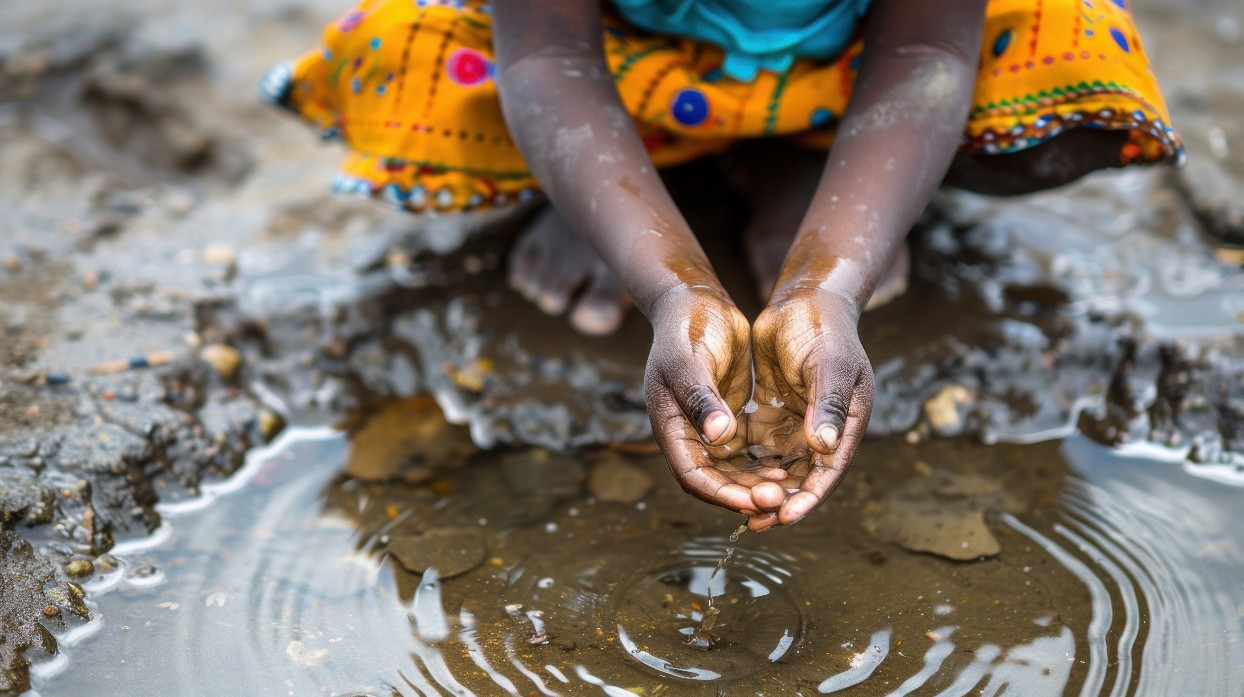
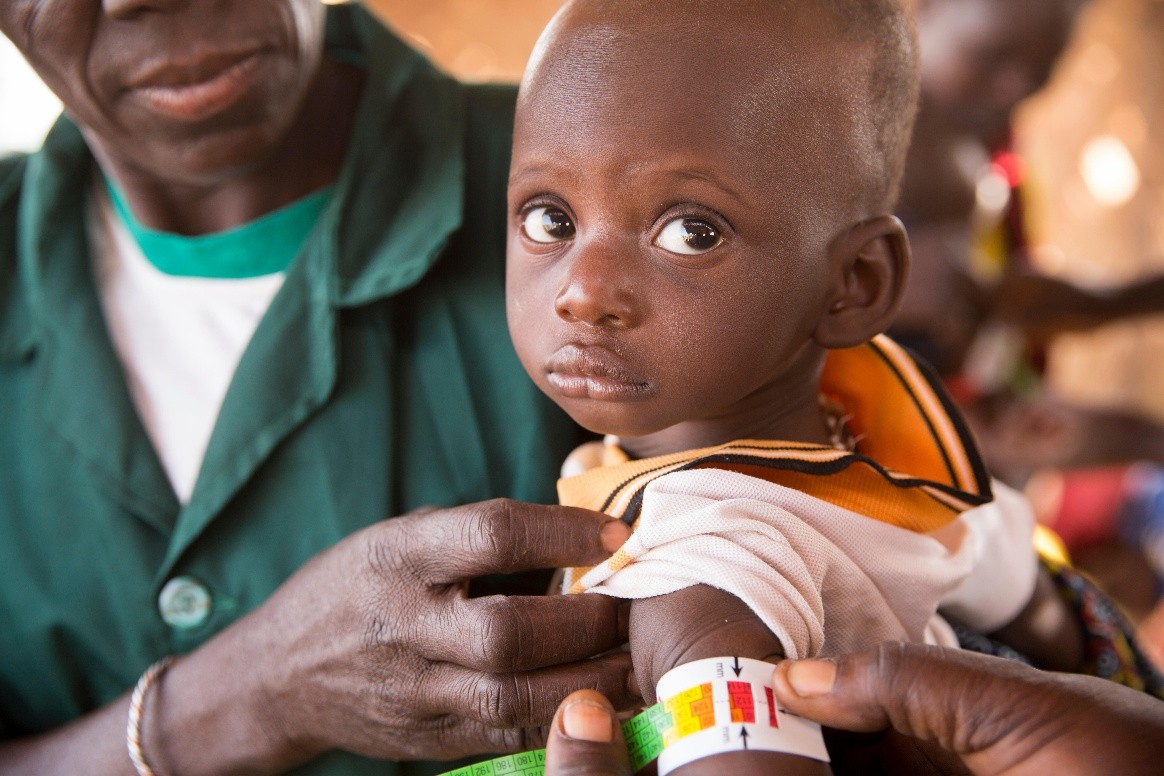
This cycle is especially dangerous for children under five, pregnant women, older people and people already weakened by displacement or disease. A malnourished child is less able to withstand infection. A child with diarrhoea can become dehydrated quickly. A family without safe water may have no realistic choice but to drink from contaminated sources.
In this context, WASH is not only about water supply. It is part of disease prevention, nutrition protection and humanitarian survival.
Sudan: where hunger, water insecurity and disease risk collide
Sudan remains one of the clearest examples of how conflict can turn water insecurity into a public health emergency.
The Hunger Hotspots report identifies a risk of Famine in areas across North Darfur, South Darfur and South Kordofan, with millions of people already facing Crisis or worse levels of acute food insecurity. The situation is expected to deteriorate further during the June to September 2026 period, with more people projected to face Catastrophe-level food insecurity.
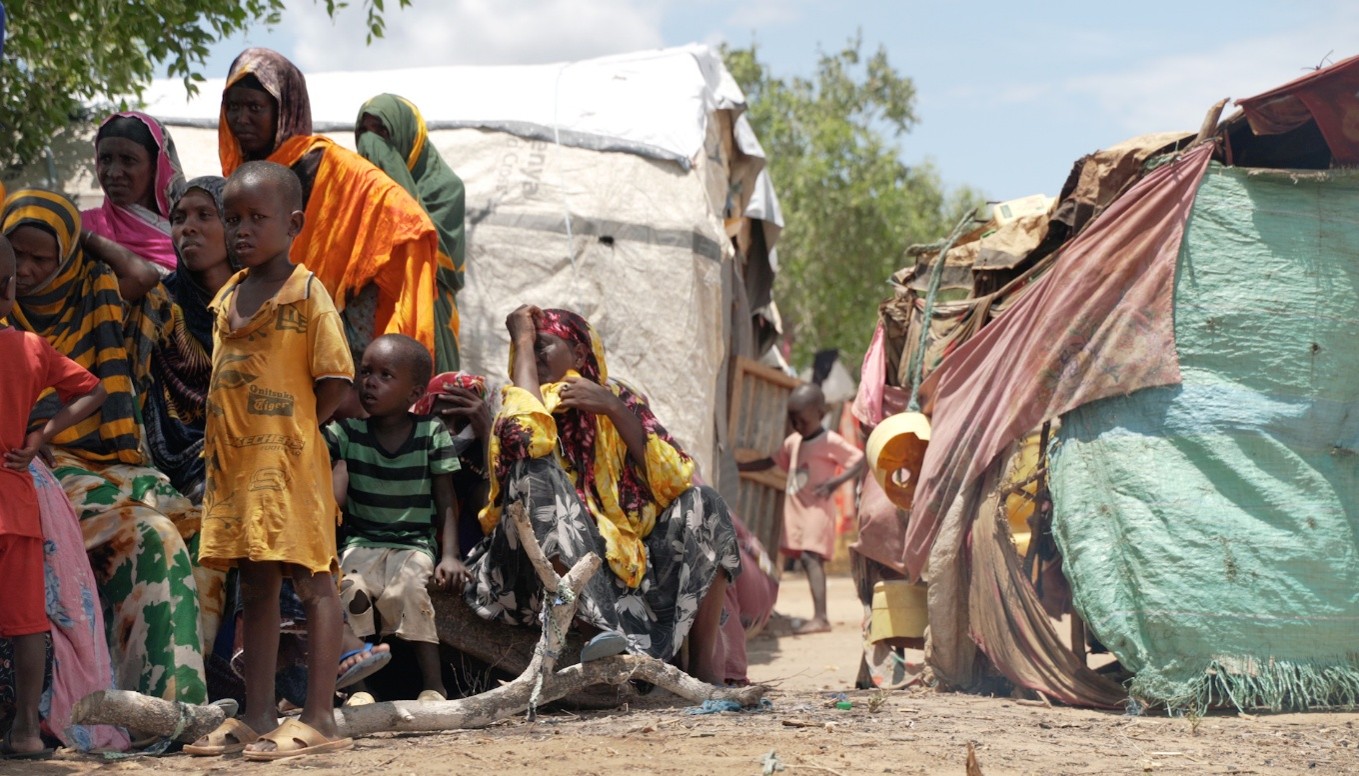
At the same time, damaged infrastructure, disrupted services and mass displacement are putting enormous pressure on water and sanitation systems. Families forced from their homes may be living in overcrowded shelters or informal settlements where toilets, handwashing facilities and safe water points are limited or unavailable.
These conditions create an ideal environment for the spread of cholera, acute watery diarrhoea and other waterborne diseases. For families already facing hunger, illness can be devastating. Unsafe water can worsen malnutrition. Malnutrition can worsen the impact of disease. Together, they push people closer to dehydration, exhaustion and preventable death.
The same pattern is visible across other hotspots
Sudan is not alone. The Hunger Hotspots report highlights several countries and territories where hunger is expected to worsen and where WASH needs are closely linked to public health risks.
In South Sudan, more than half of the population is projected to face Crisis or worse levels of acute food insecurity, with some areas facing a risk of Famine. Conflict, displacement, flooding, poor sanitation and limited access to safe water continue to put children and families at risk.
In Yemen, acute food insecurity remains among the most severe in the world. Years of conflict, economic collapse and weakened public services have left millions of people dependent on humanitarian assistance, with cholera and acute watery diarrhoea continuing to threaten communities where safe water and sanitation are limited.
In Palestine, especially Gaza, conditions remain fragile. Even where access improves, damaged systems, overcrowding, and disruptions to essential services mean families may still struggle to access sufficient safe water, sanitation, and healthcare.
Nigeria has moved into the highest-concern category, with populations in Borno State projected to face Catastrophe-level acute food insecurity. In areas affected by conflict and displacement, WASH support is essential to protect families who may already be facing hunger, disease exposure and limited access to health services.
Somalia has also moved into the highest-concern group, with a risk of Famine identified in Burhakaba District in Bay Region. Multiple years of drought, poor crop production, conflict and rising prices have weakened communities. Where water is scarce or unsafe, the risk of dehydration and disease becomes even more urgent.
Other countries remain deeply fragile. Afghanistan is facing drought, high food prices and conflict. The Democratic Republic of the Congo is facing conflict, displacement and renewed Ebola concerns in the east. Haiti remains highly vulnerable despite some localised improvements. Myanmar, Mali, Lebanon and Madagascar are also identified as hotspots where conflict, economic pressures and climate shocks are expected to worsen food insecurity.
Although each context is different, the pattern is familiar: conflict, climate shocks, economic stress, displacement and underfunded humanitarian response all increase pressure on water, sanitation, health and nutrition systems.
Funding shortfalls are making prevention harder
The Hunger Hotspots report also warns that humanitarian funding is falling at a time when needs are rising.
Funding for food assistance, emergency agricultural assistance and nutrition in food crises has declined sharply since 2022. At the same time, the number of people facing high levels of acute food insecurity in hotspot countries has risen to around 266 million. This has serious implications for WASH response.
When funding is limited, emergency water trucking, water treatment, hygiene kits, sanitation support, cholera preparedness, safe storage containers and community hygiene education can all be delayed or reduced. The result is that preventable risks become harder to control.
Early action matters. It is far more effective to prevent contaminated water from spreading disease than to respond after a cholera outbreak has already taken hold. It is also more humane, more cost-effective and better aligned with the dignity of affected communities.
Why WASH belongs at the centre of hunger response
Food assistance saves lives. Nutrition support saves lives. Emergency agriculture protects livelihoods. But without safe water, these interventions are less secure.
A child receiving nutrition support still needs safe water to drink. A family receiving food assistance still needs safe water for cooking. A health facility treating malnutrition still needs safe water for patients, carers and staff. A displaced community still needs sanitation and hygiene to reduce disease transmission.
This is why WASH should be integrated into hunger hotspot response from the beginning. It helps reduce disease risk, protect nutrition outcomes and support the health of communities under severe stress.
Core WASH priorities in these settings include:
Safe drinking water access for households, health facilities, schools and displacement sites.
Household water treatment and safe storage where piped or protected water systems are disrupted.
Cholera preparedness and response, including water disinfection, hygiene promotion and safe sanitation.
Distribution of hygiene kits, soap, containers and clear water treatment instructions.
Water quality monitoring and partner-led community education.
Support for longer-term repair of water systems, boreholes, pumps, tanks and sanitation infrastructure.
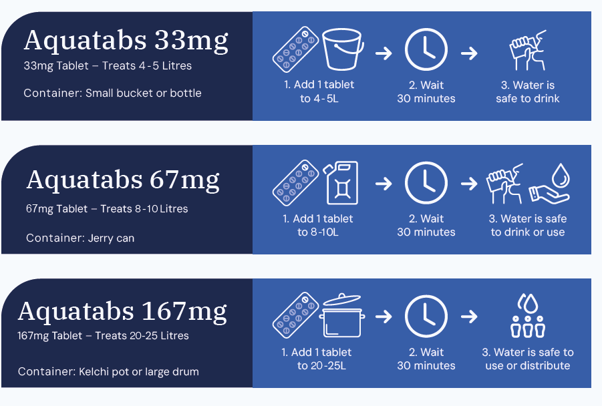
How Aquatabs can help in emergency WASH programmes
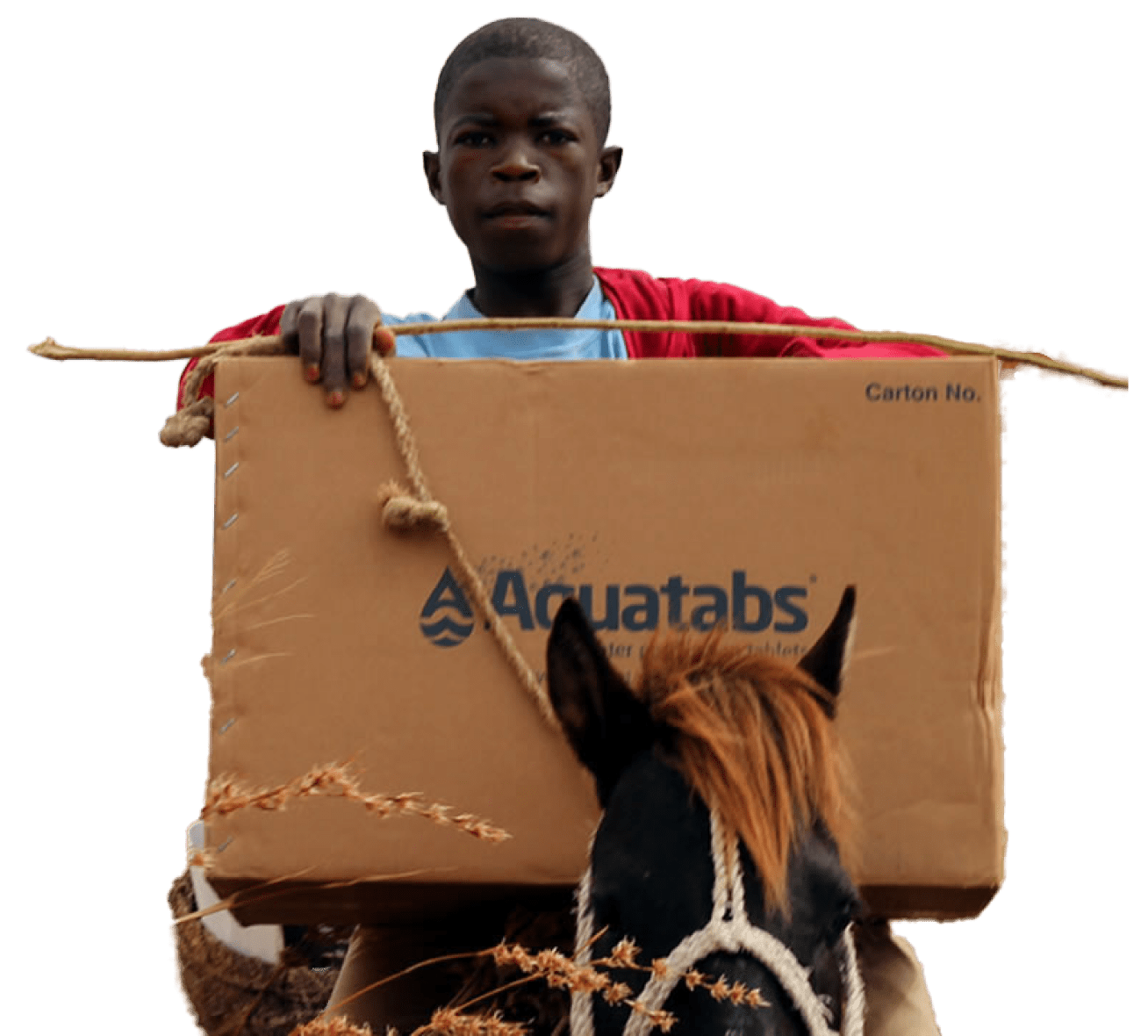
Aquatabs water purification tablets can support emergency WASH teams by helping to make drinking water safer at the household, community, and institutional levels.
Aquatabs tablets use sodium dichloroisocyanurate (NaDCC) to release a measured dose of chlorine when added to water. When used correctly, Aquatabs help disinfect water by inactivating harmful microorganisms and providing a residual chlorine effect that can help protect treated water during storage.
In emergency contexts, this matters because infrastructure solutions often take time. Boreholes may need repair. Water networks may be damaged. Fuel may be unavailable. Roads may be blocked. Families may be displaced and relying on stored, trucked, collected or uncertain water sources.
Aquatabs can help bridge that gap.
They can be distributed quickly as part of emergency WASH kits.
They can support household water treatment where people collect water from uncertain sources.
They can help protect families in displacement sites, temporary shelters and transit centres.
They can support cholera preparedness and outbreak response as part of a wider public health package.
They can be used alongside safe storage containers, hygiene education and water quality monitoring.
They can support schools, rural health facilities and community water points where appropriate product sizing and partner guidance are in place.
Aquatabs are not a replacement for food assistance, medical care, oral rehydration therapy, cholera vaccination, safe sanitation or long-term water infrastructure. They are one practical tool within a wider WASH response.
Used correctly, they can help humanitarian partners act quickly when the need for safer drinking water is immediate.
Correct use and community trust are essential
Water disinfection only works when products are used properly.
Communities need clear, simple guidance on choosing the right tablet size, using the correct water volume, filtering visibly dirty water first, allowing the correct contact time and storing treated water safely. WASH partners should also monitor water quality and residual chlorine where possible, especially in high-risk environments such as cholera-affected areas, displacement camps and health facilities.
Trust matters too. People are more likely to use water treatment products when they understand why they are needed, how they work and how they protect their families. Community engagement, local-language instructions, and partner-led demonstrations can make a major difference.
Safe water protects dignity as well as health
In hunger hotspots, safe water does more than reduce the risk of disease.
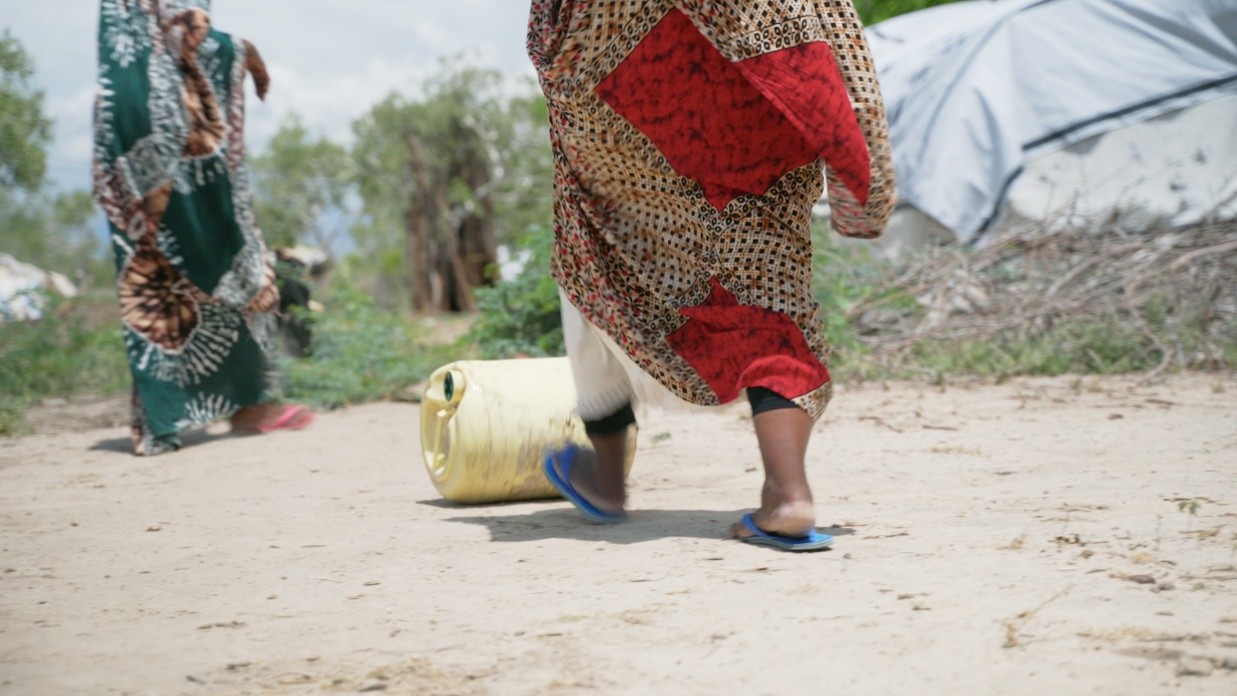
It reduces the burden on women and girls who may walk long distances to collect water. It helps children stay healthier and better able to benefit from nutrition support. It supports safer healthcare, safer schools and safer community spaces. It gives families a measure of control in situations where so much has been taken from them.
No family should be forced to choose between drinking unsafe water and going without water altogether.
A call for urgent, integrated action
The latest Hunger Hotspots warning shows that the second half of 2026 could bring worsening hunger, famine risk and deeper distress across some of the world’s most vulnerable regions.
Sudan, South Sudan, Yemen, Palestine, Nigeria and Somalia require urgent attention. Afghanistan, the Democratic Republic of Congo, Haiti, Myanmar, Mali, Lebanon and Madagascar also face serious risks. Conflict, climate shocks, economic pressures, disease outbreaks and funding shortfalls are making the situation harder for millions of people.
In this reality, WASH must be part of early action.
Aquatabs can help NGOs, governments and humanitarian partners respond quickly with a practical water disinfection option for emergency WASH programmes. When combined with safe storage, hygiene promotion, sanitation, health services, nutrition support and longer-term water system repair, Aquatabs can help make water safer when families need it most.
Contact Robert Cooper or Kate Devereux for more information on Aquatabs in WASH