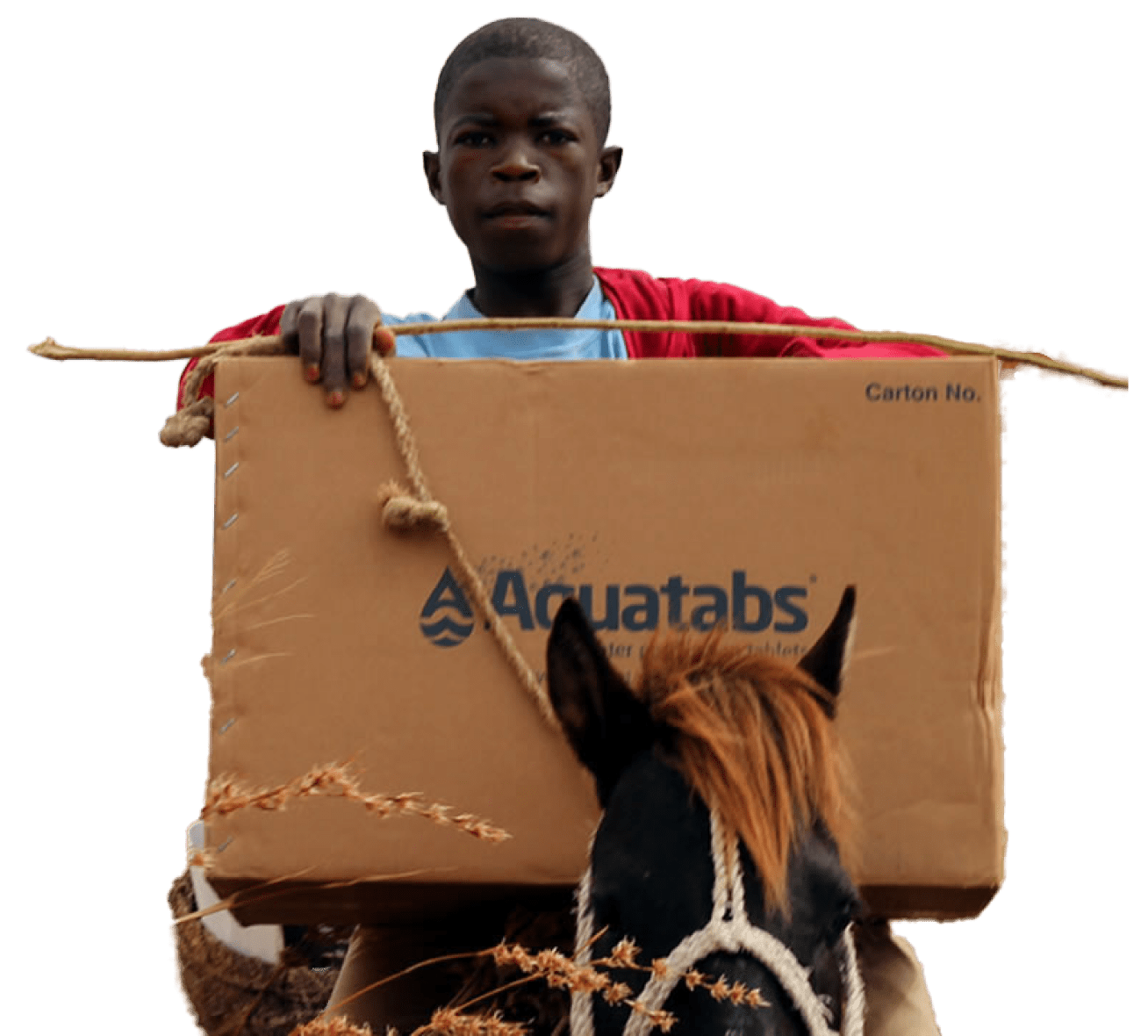
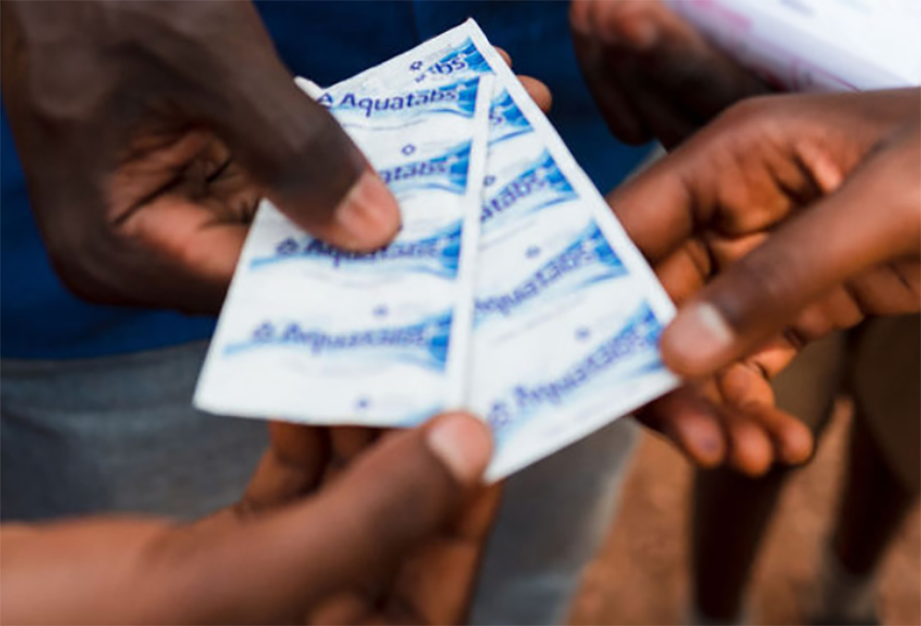
It’s 2016, in Niger’s Maradi region. Amina Harouna tries to sell something that many people don’t trust. A small tablet that could make their drinking water safer. It wasn’t the kind of product you could “prove” with a poster or a single community meeting. People were sceptical, and some simply didn’t believe it worked.
But Amina kept showing up, explaining, answering questions, and encouraging families to try Aquatabs for themselves. Over time, as awareness grew and neighbours shared their experiences, that scepticism began to shift into gradual acceptance. AfWASA’s knowledge platform highlights her story as part of a wider approach where promoting and selling Aquatabs became an income-generating activity for women, while also supporting safer household drinking water.
The approach: social marketing delivered through local expertise
Aquatabs promotion and sales in Niger’s Maradi region were delivered through a social marketing programme implemented by a local NGO with specialist expertise. The model put women at the centre of the “last mile” for household water treatment, so access wasn’t only about whether a product existed, but whether someone local could consistently explain it, make it available, and build confidence in using it.
Amina’s experience also shows how behaviour change works in real life: it isn’t instant, and it isn’t linear. She notes that sales can be strong in “good times,” but become more difficult toward the end of the dry season, an important reminder that demand and household purchasing patterns shift with seasons and circumstances.
Beyond safe water: livelihoods and practical household impact
 What makes this story especially striking is that it links safer drinking water with livelihoods in a concrete way. The AfWASA case describes how women involved in selling Aquatabs can generate income, save time, and redirect effort into other activities, such as small livestock raising, helping cover day-to-day family needs.
There are also indications that the impact can persist beyond a single project cycle. A second AfWASA knowledge entry notes that even more than 18 months after the programme ended, community volunteers continued promoting and selling Aquatabs during everyday community moments, weddings, child naming ceremonies, and women’s association activities, suggesting that once the practice is embedded socially, it can continue without constant external push.
Scale signals: what happens when awareness and access align
USAID’s WA-WASH summary adds a wider lens on scale: it reports that, with strong outreach and communications, Aquatabs sales reached more than 5 million tablets within a few months and around 10 million tablets across WA-WASH countries, used to treat an estimated ~200 million litres of water. The same source cites a typical cost of about $0.02 per 20 litres.

Taken together, the Niger experience paints a grounded picture of what “scaling impact” can mean, not just the availability of a household water treatment product, but a local distribution and trust system – often carried by women – where repetition, community routines, and credibility matter as much as the technology itself.
Footnote (cholera)
¹ The awareness activities supported by USAID WA-WASH contributed to a positive behaviour change within the villages. According to Mr Kadi Koda Ismaël, nurse in Koutoukale Koire Tegui in the municipality of Karma: “Since villagers have been using Aquatabs, we have not had any case of cholera in our health district. This was not the case before we introduced Aquatabs.” This has been reported by several other people, including Ms Aissa Moukeila from the village of Djigare.
Next month: continuing the conversation at AfWASA
Next month, those conversations will have a natural home at the 23rd AfWASA International Congress & Exhibition in Yaoundé (9–13 February 2026), under the theme “Water and sanitation for all: bold actions for Africa.” And fittingly, Aquatabs will be attending AfWASA next month– an opportunity to talk not only about products, but about the practical mechanics of last-mile delivery: trust, seasonality, livelihoods, and long-term adoption.
Make sure to connect with Robert Cooper before the event to schedule a meeting:
Ref:
AfWASA Knowledge Platform – “Aquatabs: An income-generating activity in Niger”
https://afwasakm.afwasa.org/aquatabs-an-income-generating-activity-in-niger/
USAID “Real Impact: West Africa (WA-WASH)” PDF (sales/liters treated / cost figures referenced)
https://www.developmentaid.org/api/frontend/cms/file/2025/01/RI_WA_WASH_508.pdf